Hauling in B.C. this winter: the commercial chain and tire rules, by vehicle weight
From Oct. 1 to April 30, most commercial trucks on B.C. highways must carry chains, and trucks at or above 11,794 kg LGVW need steel chains when a chain-up is ordered.
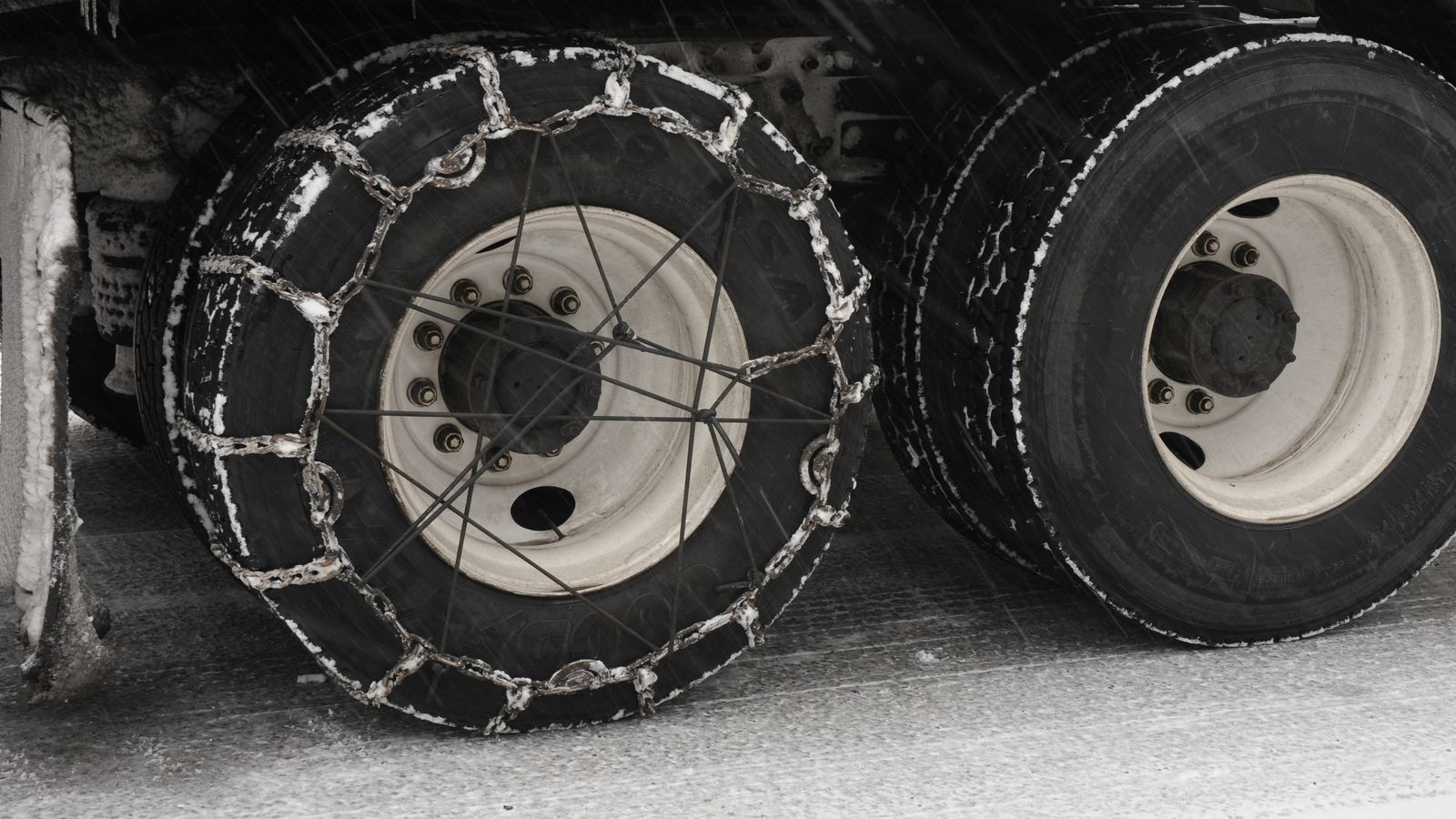
From October 1 to April 30, commercial vehicles on most British Columbia highways have to carry chains, and what counts as "chains" depends on how heavy the truck is licensed. The dividing line is 11,794 kg licensed gross vehicle weight (LGVW).
Those rules sit in the provincial Motor Vehicle Act Regulations and apply to every commercial vehicle on B.C. highways, including carriers based in other provinces or the United States.
This guide is general information, not legal advice. Check the regulation, posted signs and DriveBC before each trip.
When and where you must carry chains
The regulation requires commercial vehicles to carry chains, or the traction device allowed for that vehicle, from October 1 each year to April 30 the following year. "Carry" means stored in or on the truck so the driver can put them on when a chain-up is ordered.
There are a few exceptions:
- No requirement at all in the Lower Mainland on highways south of Horseshoe Bay and west of Hope, on Haida Gwaii, and on a few named Vancouver Island routes, including Highway 17 and Highway 14 east of Sooke.
- Season ends March 31 instead of April 30 on a list of routes named in the regulation. Examples include Highway 97 from the U.S. border at Osoyoos to Highway 1, Highway 99 from Horseshoe Bay to Highway 97, Highway 16 west of Terrace, and several Vancouver Island highways.
The province marks the designated routes with regulatory signs and publishes route maps for the South Coast, Northern B.C. and the Southern Interior.
Trucks under 11,794 kg LGVW
The province's chain-up sign gives lighter commercial vehicles a choice: winter tires or carry chains. A legal winter tire in B.C. has at least 3.5 mm of tread and carries either the three-peaked mountain and snowflake symbol or the M+S mark.
When a chain-up is ordered, a vehicle in this group, along with buses and four-wheel-drive vehicles, can use:
- steel chains, on at least one tire on each side of one drive axle
- cable chains, on at least the outside tire on each side of one drive axle
- automatic chains whose cross members cover at least 85 per cent of the vehicle's width, deployed on drive-axle tires only
- a textile tire cover ("sock") or a wheel sander, on one tire on each side of one drive axle, unless a sign or public notice says otherwise
Trucks of 11,794 kg LGVW and over
Heavier trucks, including tractor-trailers, must carry steel chains. The sign reads "must carry tire chains," with no winter-tire option. To count as chained up, the chains must have no broken strands, be used as the maker intends, and be fitted in the pattern the regulation sets for the configuration:
- No trailer: at least one tire on each side of one drive axle.
- One trailer: on a single drive axle, at least two tires on each side. On a tandem or tridem drive, either two tires on each side of one drive axle, or one tire on each side of two drive axles.
- More than one trailer: on a single drive axle, at least two tires on each side. On a tandem or tridem drive, two tires on each side of one drive axle and one tire on each side of another drive axle.
- Wide-base single tires, with one or more trailers: one tire on each side of one drive axle, plus one tire on each side of a second drive axle on a tandem or tridem.
The province's diagram of these setups is published as a one-page PDF, Commercial Motor Vehicle Chain Configurations.
Since a 2025 amendment, the ministry can give an individual carrier written permission to use a different traction device instead of steel chains on heavy trucks. The permission can be limited to certain trucks, routes and device types, can require driver training and reporting, and lasts no more than a year. A driver using it must have it on hand. Without that kind of written authorization, heavy trucks need steel chains when a chain-up is in effect.
Fines
The province lists two tickets for commercial vehicles:
- $196 for driving without carrying chains or a traction device where they are required
- $598 for driving through an active chain-up area without chains or a traction device on
RCMP, Commercial Vehicle Safety and Enforcement (CVSE) officers and other police can also turn back vehicles that aren't properly equipped.
Before you roll
- Check DriveBC's commercial chain-ups list, which shows the highway segments where trucks over 11,794 kg must have chains on. DriveBC also has highway conditions and advisories.
- Obey all winter tire and chain-up signs. Under the Motor Vehicle Act, driving past a chain-up sign without the required equipment is an offence.
- Make sure the chains fit your tires, and that drivers have practised putting them on before they need to do it on a mountain pass.